Share Barbara Sayre Harmon's obituary with others.
Invite friends and family to read the obituary and add memories.
Stay updated
We'll notify you when service details or new memories are added.
You're now following this obituary
We'll email you when there are updates.
Select your format and elements to print

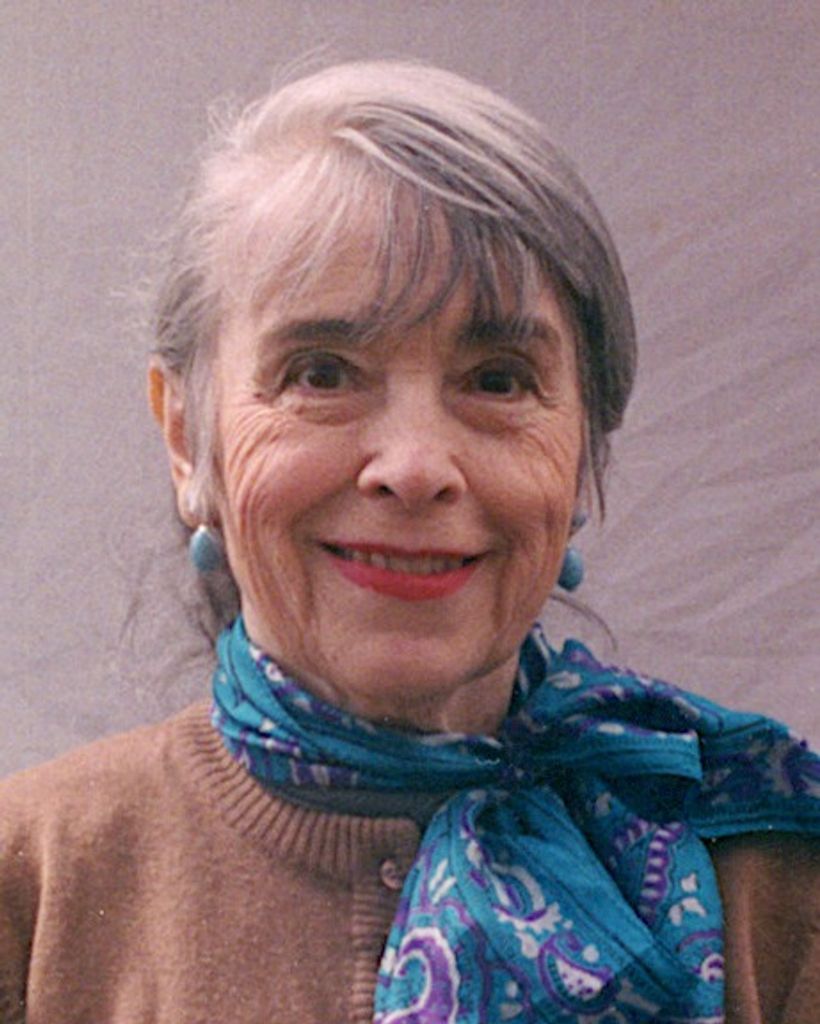


Barbara Sayre Harmon
d. Feb 8, 2026
Taos
Early on Sunday morning, February 8 2026, long time Taos Artist Barbara Sayre Harmon passed along to “The Happy Painting Grounds”, peacefully in her sleep. Born on August 8, 1927, she was at right at 98½ years. In her finally years, months and days, she retained her grace, sense of humor and empathy that were her lifelong trademark.
She is preceded by her husband Cliff, also a notable Taos Artist, who passed in 2018. Her father was Fred Grayson Sayre, one of the more famous California landscape painters who passed in 1939. Her mother was Ruth Barker who passed a couple of years later. Barbara was adopted by her aunt Bertha Sayre and her husband, Navy Capt. Louis T. Young who saw action at Pearl Harbor. Her other Sayre aunts were Beulah, Helen and Viola. Viola was also a photographer and painter of miniature portraits and still life paintings, and taught young Barbara about art. On her mother’s family side, the Barkers were well established date farmers in the Indio CA area. A family story is that they supplied date trees to help Egypt recover from a deadly tree blight.
She is survived by her son Jonathan and grandson Colin Sayre Harmon of Taos, Jonathan’s wife Julia, Colin’s half siblings Laurel, Jessie, Wm. Robert their four children, and one grandchild.
Her early life was spent in the California Coachella Valley and Glendale areas of Los Angeles where her aunts lived. Her father Fred had been a prolific illustrator in Chicago, a member of the Palette and Chisel Club – many members of which were among the Taos, Santa Fe and California art founders. However Fred had contracted diphtheria in the late 19-teens and was told to make the best of his “remaining year” in the heat and dryness of the desert. He took that suggestion and extended it to creating his family and building an extensive body of artwork of desert scenery. He was a charter member of the California Watercolor Society and co-founder of the Painter’s and Sculptors Club of Los Angeles. From the desert trips sketching and painting in plein aire, Barbara gained an appreciation for nature and wild spaces. She also attended a private school in Glendale CA where she learned formal manners, dance, operatic voice as well as daily assignments of writing poetry and composing musical tunes. While she had ambitions to be an opera singer, it was art that would become her lifelong career.
Cliff was in the Coast Guard arm of the Navy during WWII on shore patrol and later aboard sub-chasing frigates as a sonarman. His ambition after the war was to be an artist which coincided with Barbara’s. They met at the The Bisttram School of Fine Arts in Los Angeles, and were married in 1948 after following Bisttram to Taos to attend the school here in the summers. They also spent time at Black Mountain College in Asheville, NC, where Cliff attended formal art classes during the 1949-50 winter semester, and Barbara learned various artistic endeavors, in particular book binding from Johanna Jolowitz, that became a paying job. She learned etching from Lawton Parker in 1951.
Cliff exhibited at the La Fonda Gallery on Taos Plaza, and Barbara was an attendant there. She was surrounded by the work of the Taos Founders and was influenced by them. Through Barbara’s close friend and Bisttram student Duane Van Vechten and her husband Ed Lineberry, they acquired a one acre plot of vacant land in 1949 on the edge of town on the ridge overlooking the Leon Gaspard house, and she and Cliff built a one room house on it. Jonathan was born to them in 1951 in Embudo. They had chickens for eggs, a goat for milk, a dog who nibbled a bite of each cookie in a batch as they cooled, and an old black pickup truck named Lucifer.
Barbara was published in El Crepúsculo (predecessor to the Taos News) April 23, 1953 in an article titled “Bookbinding Is Her Specialty.”
Sadly, staying in Taos was economically unsustainable for them so they had to leave; spending a short time in Albuquerque, and then moving to Santa Monica, CA, near Cliff’s parents, then to LA on Sawtelle Blvd, and later in Culver City. Then circa 1958 they moved to Glendale to the Sayre aunt’s house on Louise St. Helen and Beulah had passed, Bert and Lou had retired to Medford, OR, and Viola lived in the back yard “mother in law” quarters.
During this time Cliff found work for aircraft companies, such as Douglas, ESCO and Rocketdyne, building exquisitely detailed wind tunnel test models – a skill he picked up in Taos from famous traditional furniture maker Maximo Luna whose #1 rule was “no power tools." Luna’s work is on display at the Harwood Museum. Cliff made a house full of furniture in that method and style that is still in use.
Cliff and Barbara collaborated in making miniature props for friend Don Peters for the movie “The Great Race." The car they made can be seen rolling down a long table in the early part of the movie. Barbara did the upholstery using tiny brass tacks. Another movie project was little motor driven furry cute aliens with long eye stalks she called “Purple Gerpils." Cliff did the mechanics, Barbara the fur etc. Barbara worked on honing her water color skills, including works that were exhibited at a retrospective show at the E. L. Blumenschein Home and Museum in late 2012.
Between Cliff’s contract jobs, they returned to Taos in the summers. At some point, a second room was added, the kitchen.
In the summer of 1962 Viola decided to sell the Glendale house and moved to Oregon to be with her sister. Viola gave Cliff and Barbara a third of the proceeds. This was the financial stake they needed to move back to Taos, this time to stay.
In 1963 Cliff built a studio building for himself, extended the house to include the “press room” for a giant Chandler & Price letterpress purchased from El Crepúsculo, a bedroom for Jonathan, and a courtyard with a separate privy, half of which was later converted by Jonathan into a photo darkroom. Half of the “living room” became Barbara’s home studio, though she mostly worked at her Gallery.
Barbara had her first one-person show at the TAA Stables Gallery in October 1967 and continued showing there for many years in various shows. They were both active members of the Stables Gallery for decades. Also in that year, the book “Tabbigail’s Garden” was published on the letterpress, with Taos News articles and advertisements to launch. In 1968 a large rented Multilith 1250 found its way into the kitchen and was used for many lithographic prints and two books: The Little People’s Counting Book and This Little Pixie. Monday’s Mouse was printed on the letterpress. The Multilith was too big and expensive to keep and was eventually replaced with an A. B. Dick 320 table top press. It is still in the living room. She worked with the Baker Company print division as well.
Later, in 1970, a good year or two of art sales was invested in a new, larger studio for Cliff closer to the house and for Barbara, a custom appointed “Cottage."
Barbara’s first solo retail outlet in Taos was The Children’s Gallery as a suite at 103A Bent Street, right across from the Historic Taos Inn in 1963. It was also known as Galleria Los Niños. A few years later, Cliff built a gallery for both of them, The Torreon Gallery at 903 Paseo Del Pueblo Norte in Placitas, the pitched cedar shake roof place in the S curve to El Prado on the east side now past KVOT. Barbara referred to it as her “Mother Goose” house.
Later again that property was sold, and Barbara reestablished The Children’s Gallery in the gazebo in Wengert Patio – a block east of Taos Plaza on Kit Carson Road, adjoining other galleries in suites and Ricardo’s Restaurant. Cliff also rented a long room beyond the restaurant.
After many years, they decided to simplify their lives and exhibit primarily at their home studios. Additionally, she exhibited in many venues such as Preusser Gallery in Taos, the Blair Galleries Ltd., in Santa Fe, etc. She also participated in the Autumn Art Festival – Taos invites Taos for many years. As a logical extension to her lithographic printing, she also embarked on a journey to discover the world of fine art Giclée printing with Century Editions in Costa Mesa, CA. Once she had a booth at the LA Convention Center for an Art trade show. At one point, in the mid ‘70’s, Barbara spent a whole month in Santa Fe doing a full long-wall fresco mural at a shop a block or two NE from the Plaza.
Barbara loved to travel. She took many trips to Mexico, and long trips to Yugoslavia, Morocco, Spain and Turkey. Sometimes she went with Cliff, or with a group of close friends who specialized in Oriental dance who traveled as a group to Egypt. Other times she went alone.
Barbara also had an extensive group of clients in Texas. Some had been tourists and saw her work here. Others were clients of The Baker Company in Lubbock. The Baker Gallery of Fine Art exhibited her work from 1963 – 1997 and were instrumental in publishing her book “Thimbly Hill” in 1980. A few of the clients developed multi-generational traditions of acquiring a Barbara Harmon work to commemorate the birth of children, grand- and great-grandchildren. Her other major book publication was “The Tumpfee Wood Acorn Book” in 1977, detailed in a magazine article in The Santa Fean in 1979. Barbara is listed in some annual editions of the Marquis Who’s Who of Art in America.
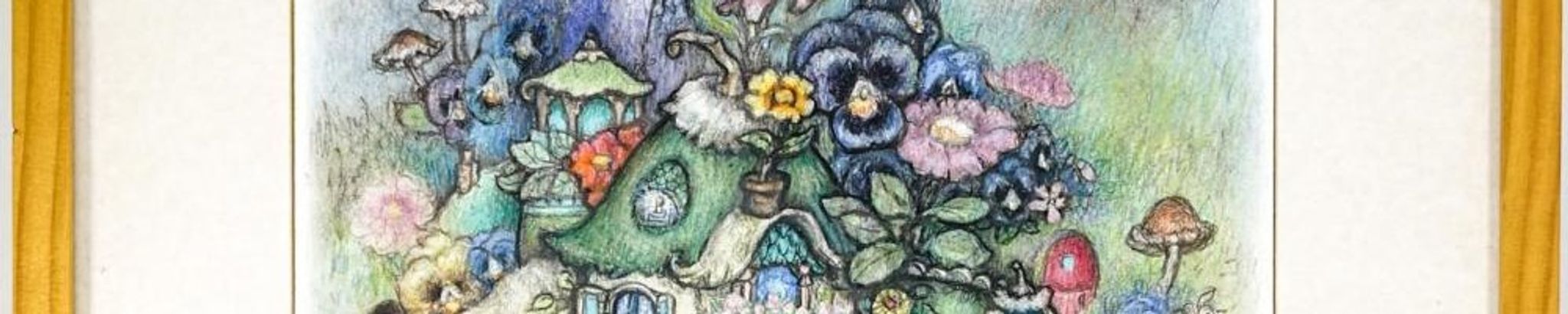
Barbara is most famous for her fantasy world of “Wilderwish”, a land of magical self-reflective inspiration, populated by all manner of fanciful characters of many species living together in harmony. They are sometimes visibly present in still life and garden scenes, other times hidden except in the viewers imagination. She also loved producing fantasy iridescent appearing bottles and vases.
She was not limited to fantasy. Her more classically serious work were portraits and city scenes. The portraits are somewhat in the ethereal form of Nicolai Fechin, whose daughter Eya was a friend. The trips to the Middle East and Africa inspired elegant yet fanciful street scenes. Those were her very own style, but the composition is reminiscent of Leon Gaspard, whose house was then across a couple of alfalfa fields away.
Barbara was featured in a one-person 65 years retrospective exhibition in September, 2012 through April 2013 at the E. L. Blumenschein Home and Museum in Taos. Her books and prints were available there in the gift shop for many years.
Her paintings and original graphics are in the permanent collection of the Harwood Museum of the University of New Mexico, the Taos Art Museum and Fechin House, Stanford University Library, Taos Public Library Children’s room, as well as other museums and a great number of private collections including Ernest Blumenschein whose daughter Helen was a long time close friend.
Web links:
Profiles: Art :: Remarkable Women of Taos :: Remarkable Women of Taos
by Teresa H. Ebie
- Works – Barbara Harmon – People – Harwood (same article, different photos)
- Harmon Studios - Barbara – Portfolio
Publications: (incomplete!)
- American Artist May 1975 “Magic and Mastery” by Mary Carroll Nelson
- The Santa Fean July 1979 “The Tumpfee Wood World of Barbara Harmon” by Kelly Malore Cribbs
- New Mexico Magazine December 1881 “All Things Are Possible” by Tricia Hurst (includes cover art)
Books created for and reprinted on Amazon:
Amazon.com : Barbara Sayre Harmon
- https://www.amazon.com/Four-Poems-Pictures-Magical-Locations
- https://www.amazon.com/Little-Peoples-Counting-Book (original was tiny, hand printed and bound)
- https://www.amazon.com/MONDAYS-MOUSE-Barbara-Sayre-Harmon (original was tiny, hand printed and bound)
The family of Barbara Sayre Harmon has entrusted the care of their loved one to the caring staff of DeVargas Funeral Home of Taos. 866-657-4019 www.devargastaos.com

Guestbook
Visits: 1602
This site is protected by reCAPTCHA and the
Google Privacy Policy and Terms of Service apply.
Service map data © OpenStreetMap contributors